
Why being accidentally genre-fluid as a writer changed the rules.
Updated: May 28
Why writing across forms and genres can kick open everything.
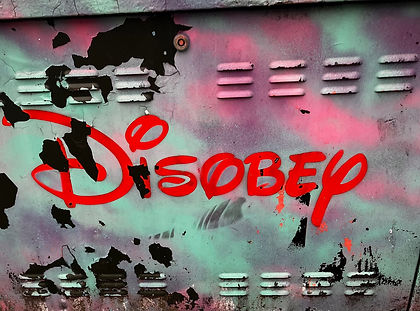
I’m accidentally genre-fluid. Started out a playwright, lucky break. Early twenties. Wrote a play and a novel simultaneously, both out of the back of my head without knowing anything and the play had a life and the novel didn’t. So I set off writing for the theatre. Wrote a couple of plays for young people, made youth theatre in Scunthorpe, then a hip-hop musical (I wrote the story and words lol), probably one of the most amazing theatre experiences of my life.
Then everything changed because I got caught outside of theatre – two small babies, living in a Yorkshire town I loved (just around the corner from Hebden Bridge) but no new-writing, knew no writers and not knowing hardly how to get my clothes on the right way, couldn’t get away. So, having to stay close to home I fell into writing audio for the BBC working with a brilliant theatre director new in the job, who asked me to write something. I had never heard a radio-play before, thought they were rubbish (was wrong about that), but it opened up a world of possibilities of not only keeping writing as the kids grew, but experimenting, going anywhere and dreaming big.

Then as I started to write some crazy original audio, I got the amazing opportunity to adapt literary monsters for theatre and radio. So I got to unpick and walk in the work of Henry James, Virginia Woolf, Charlotte Brontë, Tolstoy, Lawrence and the wonderful John Irving. To get inside the construction of such incredible writing, to not understand, to try and unpick, to question, and go around again. That’s where I began to figure out how story worked. It was a challenging, rigorous education of not knowing what I was doing until I did.
But something else was happening. There was a kind of door for me in all this that opened through adapting work. To mystery, to something I didn’t know yet, kept getting drawn to a slip-through of ideas to the future. A narrow walkway of giving myself permission through adaptation to a stage-play that was both a Greek tragedy and Persephone returning to a slate-town in North Wales. Pomegranate at the Royal Exchange.

I wrote a new play that got into Charlotte Brontë’s head and unpicked her last novel and found a constrained female clone, which became a reimagining of Villette at the Leeds Playhouse and is now the bones of my first novel. Did a mad BBC play about Orpheus and Eurydice, in collaboration with Simon Armitage, where Orpheus was a pop-star and Eurydice overdosed on MDMA, and Orpheus went into the underworld (club-land) to find her. Suddenly I was up to my neck in mash-ups and sub-genres, specifically science-fiction.
So I started writing a speculative novel in secret almost to myself – but could I stop, sit down and just stay in this place for awhile? It’s hard to do that as a playwright. Especially one who works in sound and is so used to the fast movement of that rhythmic merciless form. I have to put very slow music in my ears, and just keep cracking open the subtle offer of space and time and words that I would gut out of my plays. Breathe occasionally. Let people crawl into my mind and allow the ghosts and stories not to just haunt (as they do in plays), but rise.

I’m still that writer, slipping through doors, still kind of looking. Am I genre-fluid because I had such compressed amounts of time as a parent, kicked out of school at sixteen, no writers before me in my working-class family, or in my world, so that I never quite had the capacity or luxury to choose the way or know what I was doing?
Yes, definitely.
But I also love that those constraints have set me off in places I never expected to go. My first novel, speculative dreaming, ‘The Sky is the First Thing,’ is out on submission. I’m writing my second, science fiction, 'There will be Monsters,' VR/AI, a woman creating a woman, kicked out from Frankenstein. My contemporary adaptation of 'The Secret Garden', where a young refugee girl finds a secret garden on top of a high-rise in Leeds, will be at the Leeds Playhouse and Theatr Clwyd next spring. And I’m developing my BBC podcast-series, 'No Place but the Water', into a YA novel, still figuring out how to tell big stories about climate change.
Certainly being genre-fluid, is the need to work, to make a living. To go where the work takes me. It probably has something to do with neuro- diversity. I am also in TV development, but that’s a whole kind of different hell. But I also think genre-fluidity is fighting to tell stories, finding a way around, freedom to find the right genre to ask big questions, figuring out how to tell the story I really want to tell in the form I love and go there. But just lately, as I dive back into the deep waters of fiction – I can’t help thinking it’s showing me the way home.


Comments